Chemical Containment Coatings
We take containment work seriously — because the consequences of getting it wrong aren't just a callback. It's a spill, a fine, an environmental incident, or an injury. Chemical containment coatings aren’t designed to look good; they are designed to hold when something goes wrong. We install them as if they will.
What Chemical Containment Coatings Actually Do
Secondary containment exists for one reason — to keep a chemical spill from becoming a larger problem. Whether it's a transformer pad, a chemical storage room, a fuel transfer area, a processing bay, or a drum storage facility, the coating on that floor is the last line of defense between a controlled incident and an uncontrolled one.
That coating has to do several things simultaneously. It has to resist the specific chemicals stored or transferred in the area, not chemicals in general, but the actual compounds that will contact that surface. It has to seal the concrete substrate completely, with no pinholes, no holidays, no voids at cracks or joints. It has to withstand the physical demands of the space — forklift traffic, drum drops, cleaning chemicals, and temperature cycling. And it has to do all of this without delaminating, blistering, or degrading over time.
Standard epoxy doesn't always meet that bar. In chemical containment environments, we go to novolac.
Why Novolac Epoxy — Not Standard Epoxy
Novolac epoxy is a higher-performance formulation specifically engineered for aggressive chemical environments. Where standard epoxy provides good resistance to many common chemicals, novolac provides superior resistance to a broader and more aggressive chemical spectrum — including many solvents, acids, caustics, and hydrocarbons that standard epoxy cannot reliably withstand over time.
The chemistry behind it is straightforward. Novolac resins have a higher crosslink density than standard bisphenol-A epoxy — meaning the cured film is tighter, less permeable, and more chemically resistant at the molecular level. Less permeability means fewer pathways for aggressive chemicals to penetrate the substrate. Higher crosslink density means better performance under thermal cycling and chemical exposure over the long term.
For secondary containment — where the coating may be exposed to chemicals not just in normal use but in a spill or overflow event — that performance margin matters. We specify novolac on containment applications because we're not building a coating for everyday conditions. We're building one for the day something goes wrong.
A Failed Containment Coating Isn't a Callback. It's a Crisis.
Every floor we install matters to us. Containment work is the one that keeps you up at night. When a containment coating fails, you don't get a call from a disappointed customer. You get a sequence of events — and each one is worse than the last:
A pinhole becomes a pathway. A holiday the size of a pencil tip, invisible without testing, is all it takes. The coating looks fine. Then something overflows. The chemical finds the pinhole. It doesn't stop there.
The substrate absorbs what the coating was supposed to stop. Concrete will absorb virtually any liquid given time and pressure. Once a chemical breaches the coating — through a pinhole, an unrepaired crack, a missed cove detail — it's in the slab. You can't wipe down contaminated concrete. That problem is now structural.
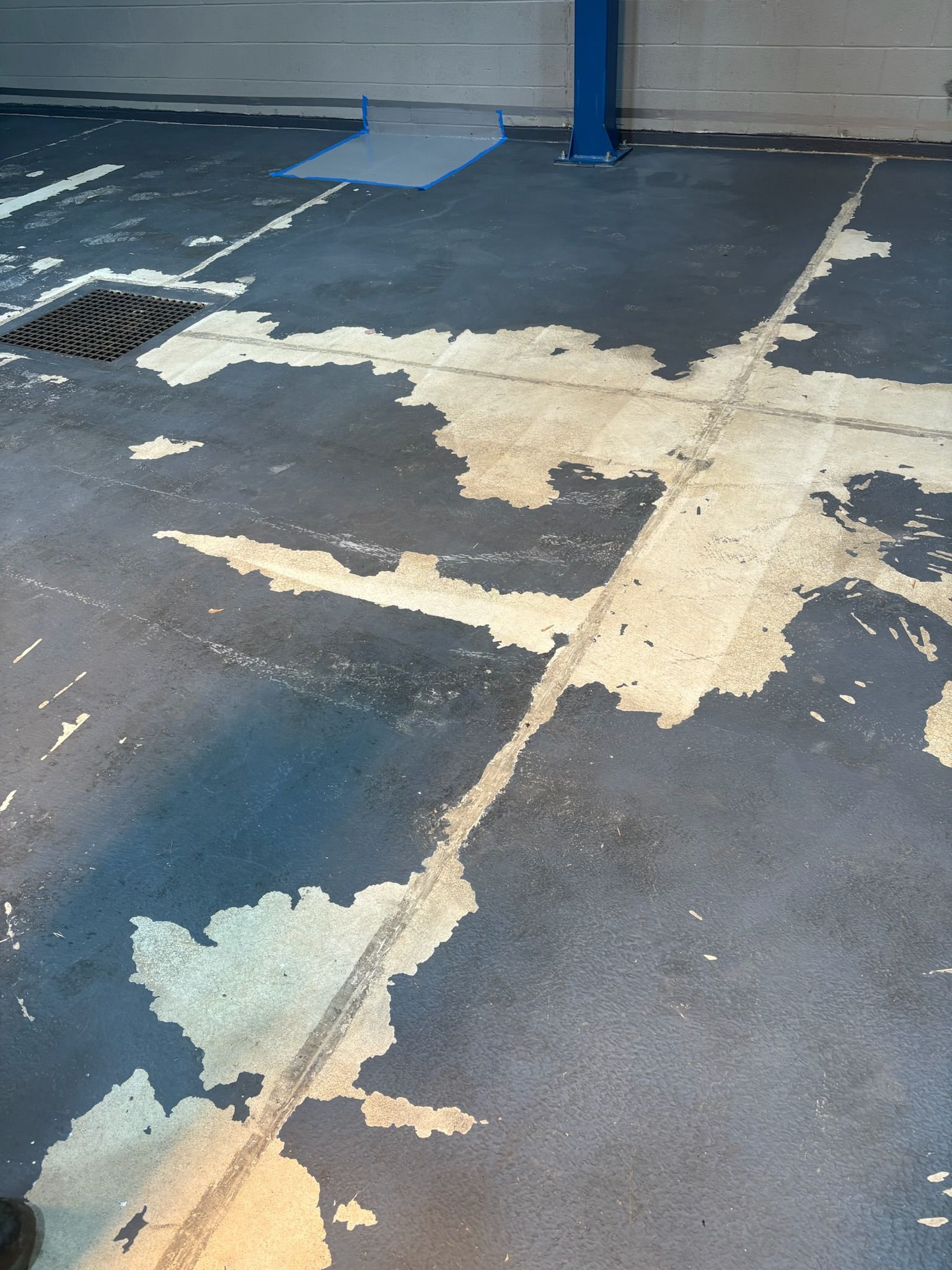
The coating fails from underneath. Once the chemical gets behind the coating, osmotic pressure lifts it. It blisters. It disbonds in sections. What started as a pinhole is now a failed floor — and the containment system no longer exists.
Regulatory exposure. Depending on what's stored in that area — fuel, transformer fluid, industrial chemicals — a spill that breaches the floor may be a reportable environmental incident. EPA. PADEP. OSHA. That is no longer a flooring problem. That is a legal problem with a long tail.
Facility downtime. A contaminated containment area goes offline until it's assessed, remediated, and rebuilt. In a processing facility or industrial installation, that downtime has a real dollar value.
The insurance conversation. Secondary containment requirements exist because insurance and regulatory permits mandate them. A failed system that didn't perform during a spill event means a contested coverage question. Was it installed correctly? Was it tested? If the answer to either is no, that conversation gets complicated fast.
This is why we don't cut corners on containment work. Not on surface prep. Not on crack and joint repair. Not on cove base. Not on film build. Not on cure time. Not on holiday testing.
How We Build a Containment System
Containment coating work is not a roll-and-go application. The system is only as good as the substrate preparation and the installation process that places it. We approach every containment job with the same rigor we'd apply to any critical infrastructure coating.
Substrate evaluation first.
Before product selection, we assess the concrete — moisture vapor emission rate, surface profile, existing cracks and joints, prior coating history, and any chemical contamination that has already contacted the slab. A contaminated or vapor-emitting substrate will cause any coating to fail, regardless of the product. We address substrate issues before they become coating failures.
Surface preparation.
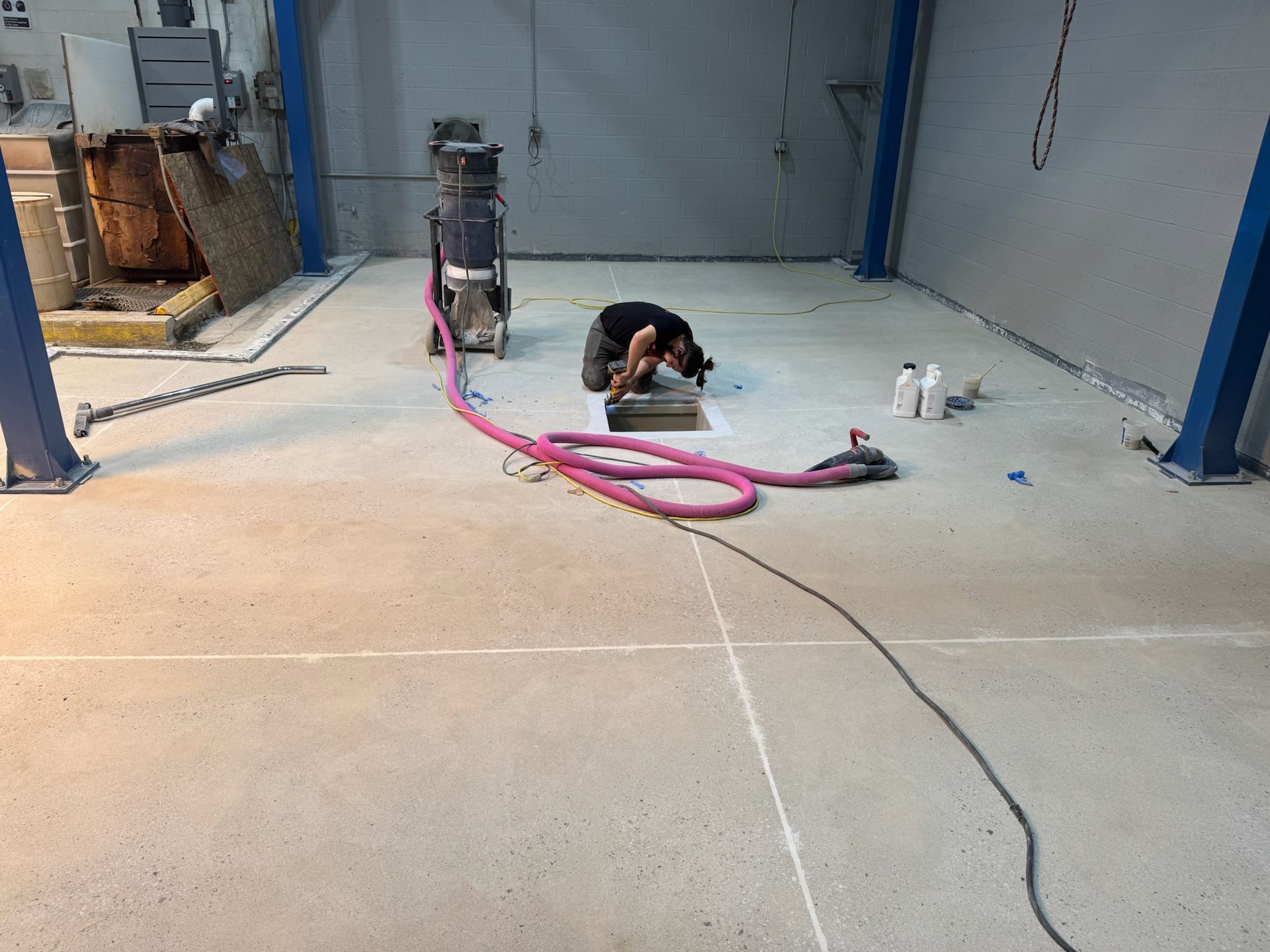
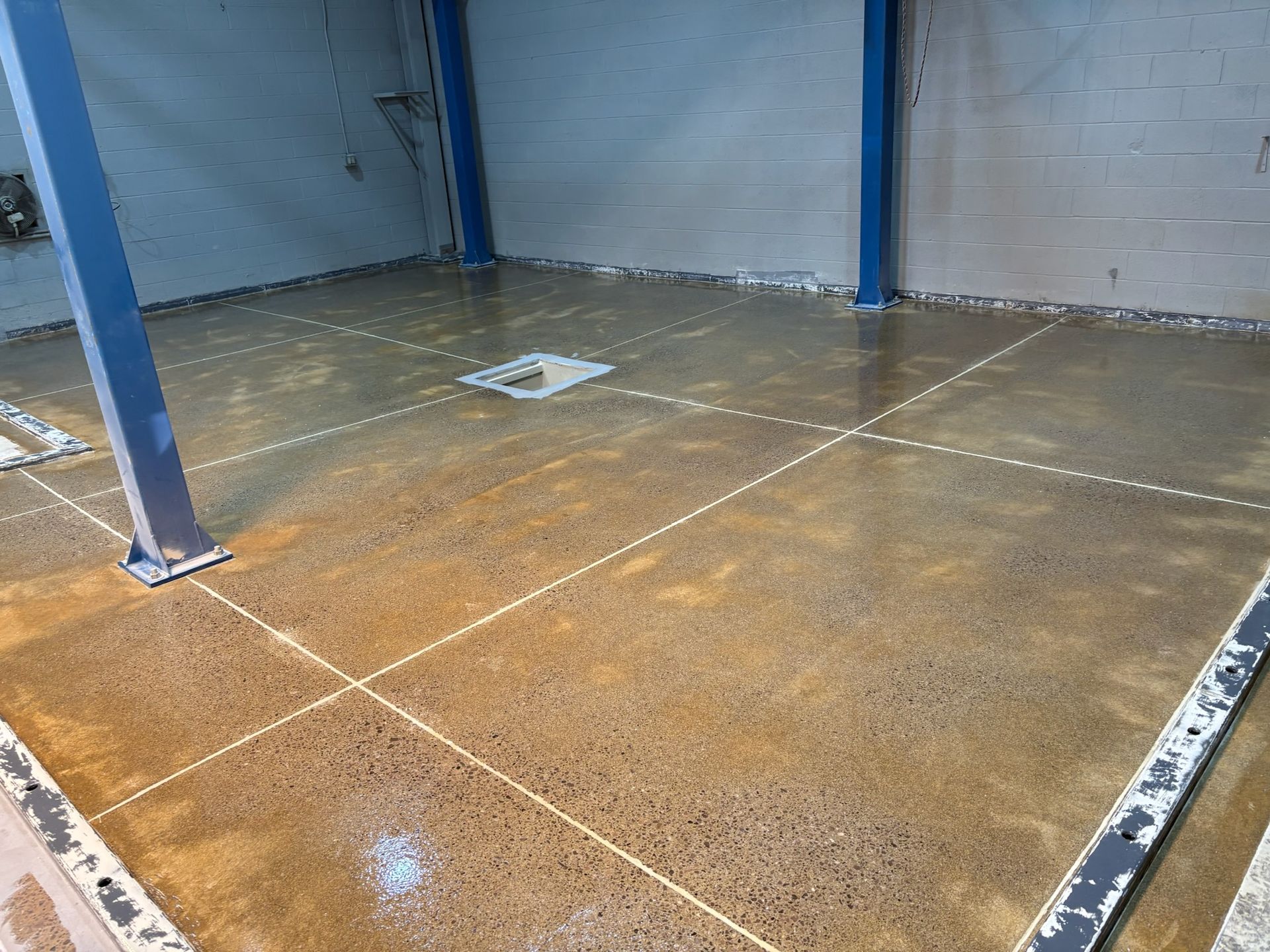
We mechanically prepare the concrete to the profile required by the system specification — typically CSP 3 or higher for broadcast systems — using diamond grinding or shot blasting, depending on the scope. Surface prep is not a shortcut step on a containment job. The bond between the coating and the concrete is the foundation of the entire system.
Crack and joint repair.
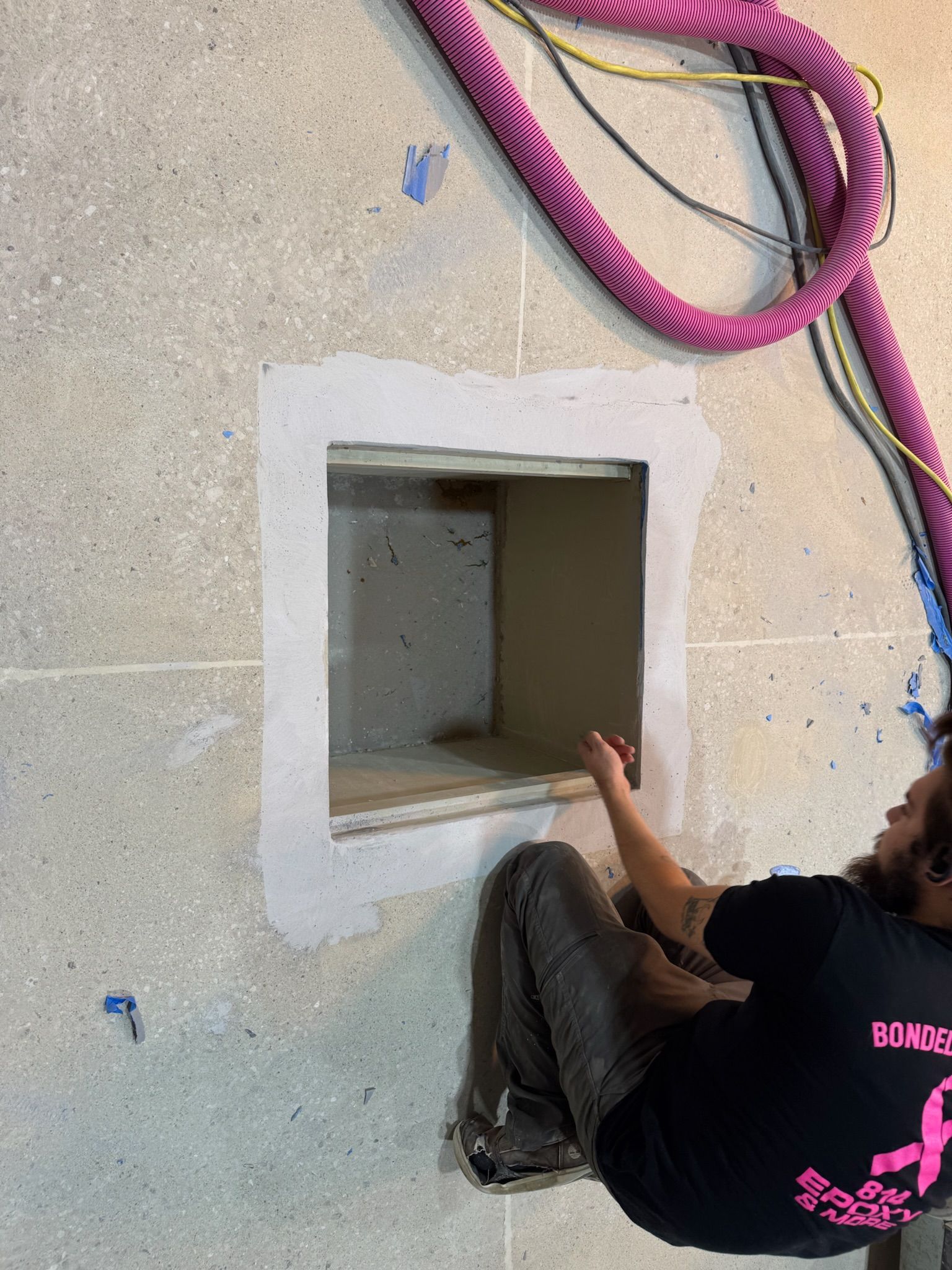
Every crack and control joint in the containment area is addressed before the coating goes down. Open cracks and joints are penetration paths — in a containment environment, a crack that lets chemical through the coating defeats the entire purpose of the installation. We use chemical-resistant joint fillers and repair mortars appropriate for the service environment.
Novolac epoxy system application.
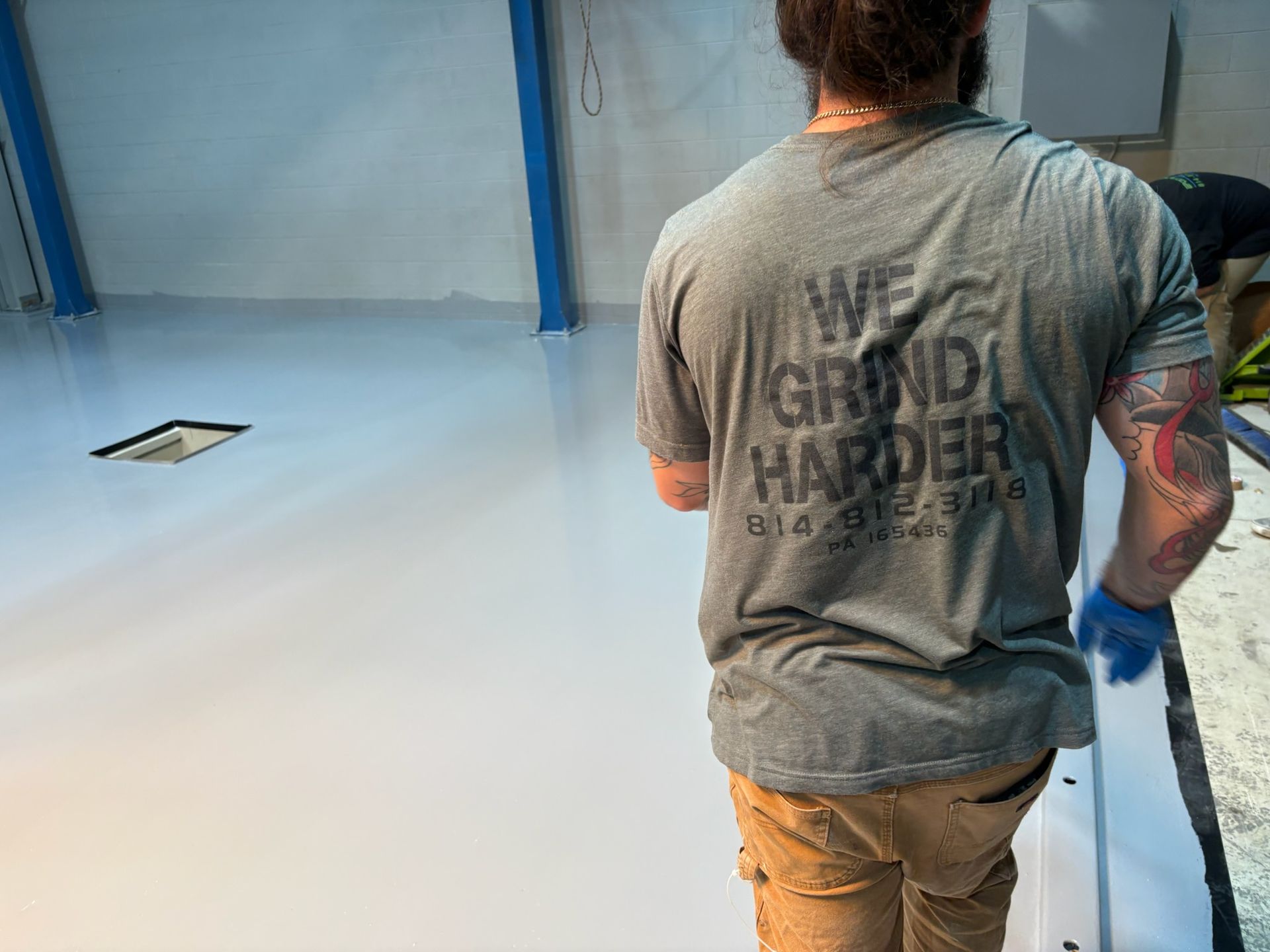
We apply the novolac epoxy system in accordance with the product manufacturer's specifications — correct film build, correct recoat windows, correct ambient and substrate temperature conditions. We don't rush cure times to meet a schedule. A containment coating that's applied out of spec is a liability, not an asset.
Coving and detailing.
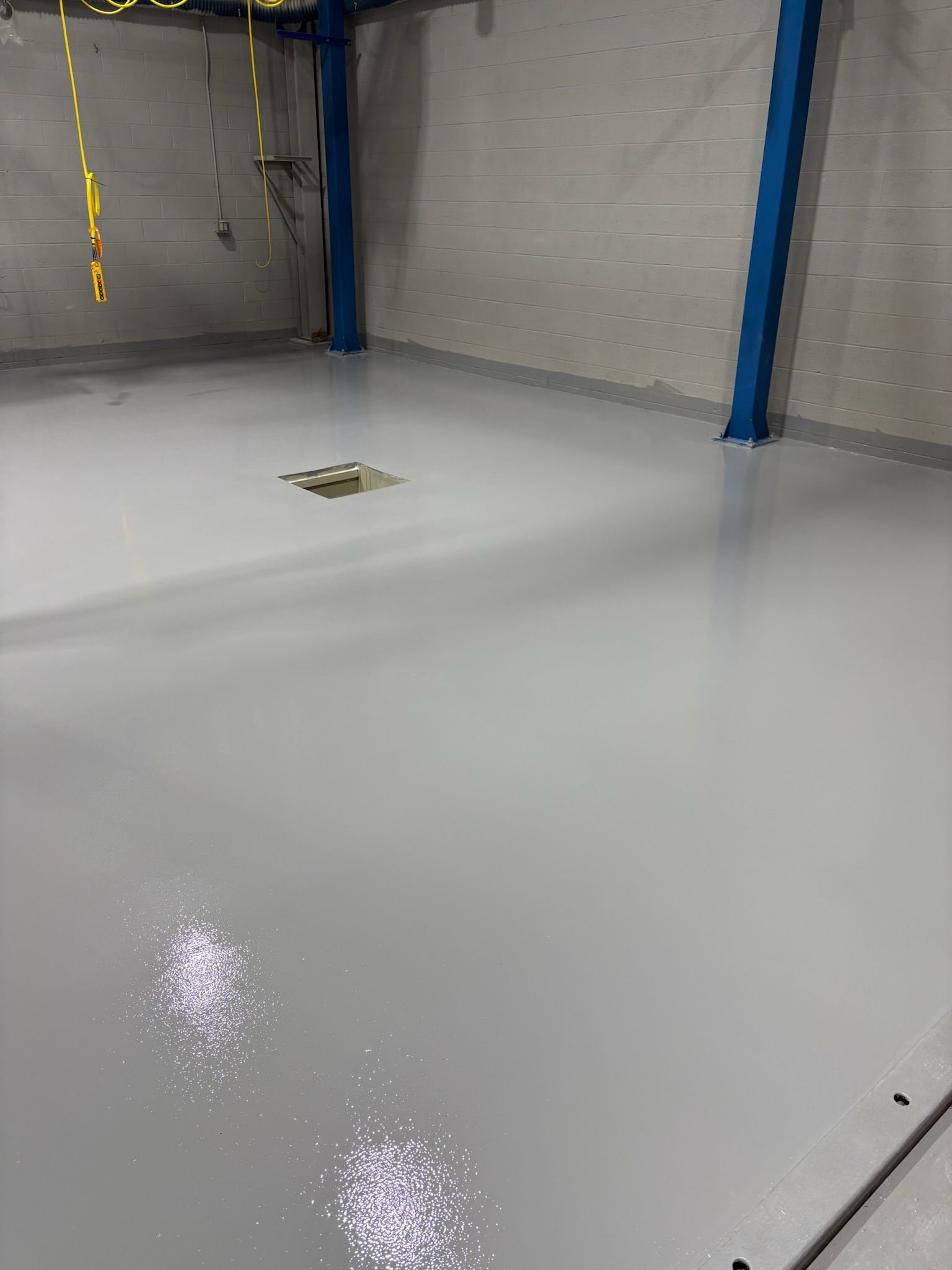
Where the floor meets the wall — the cove base — is the most critical detail in a containment installation. A spill doesn't stop at the floor-wall junction. The coating must turn the corner continuously, without voids, bridging, or delamination at the transition. We form and coat the cove base as part of the system, not as an afterthought.
Holiday testing.
On containment applications, we recommend spark testing or holiday detection after final cure to verify coating continuity. Pinholes and holidays that are invisible to the eye are detectable with the right equipment — and in a containment environment, finding them before the coating is put into service is the whole point.
This Work Has Consequences. We Treat It That Way.
Containment coating is not a commodity service. The difference between a properly installed novolac containment system and a standard epoxy rolled over an unprepared substrate is not a few thousand dollars — it's the difference between a coating that performs when it's tested and one that fails when it matters most. We come from a background in concrete restoration. That means we understand how substrates behave, how coatings bond, and what causes systems to fail over time. On a containment job, that knowledge is not optional — it's the difference between a system that holds and one that doesn't.
If you're putting product in that space, you need a coating that was installed correctly. We install it correctly.
Typical Containment Applications We Serve in Erie & Northwest Pennsylvania
- Chemical storage rooms and drum storage areas
- Secondary containment berms and pads
- Transformer pads and electrical equipment areas
- Fuel transfer and dispensing areas
- Industrial processing bays with chemical exposure
- Wash bays and parts cleaning areas
- Wastewater treatment facilities
- Manufacturing floors with chemical handling
- Municipalities and utility facilities
Why Industrial Customers in Northwest PA Choose 814 Epoxy for Containment Work
- Novolac epoxy systems for superior chemical resistance in aggressive environments
- Full substrate evaluation before product selection — moisture, contamination, profile, cracks
- Mechanical surface preparation to the required CSP profile — no shortcuts on bond prep
- Crack and joint repair with chemical-resistant materials before coating application
- Cove base forming and coating — the floor-wall transition is part of the system, not an afterthought
- Holiday testing is available to verify coating continuity after final cure
- Masonry and concrete restoration background — we understand how substrates behave under coatings
- Familiar with the demands of commercial, industrial, and municipal environments in Erie's climate
- Serving Erie, Crawford, Warren, Venango, and surrounding counties in Northwest Pennsylvania
Chemical containment is not a floor coating application. It's an infrastructure installation with regulatory and safety implications. We build these systems to perform — not to pass a visual inspection and fail six months later.
Ready to Talk About Your Containment Application?
Every containment job starts with an on-site evaluation. We'll assess your substrate, identify the prep required, specify the right system for your chemical exposure profile, and provide an accurate number before any work begins.
These are just a few of the clients we work with.