Crack & Joint Filling
Not All Cracks Are Equal — And the Wrong Repair Will Cost You Twice
Concrete moves. It shrinks, expands, settles, and reacts to moisture and temperature cycling — especially in Erie's climate. The cracks and joints you see on the surface are a record of that movement, and each one tells you something different about what the slab has done and what it's likely to do next.
There is no universal crack repair product. There is no one-size-fits-all method. What separates a floor that holds together for fifteen years from one that fails at the repair line in eighteen months is the decision made before the fill gun comes out. We make that decision based on joint width, depth, movement history, load conditions, and the intended finish — and we use professional-grade materials matched specifically to each scenario.
We carry three distinct repair approaches on every job:
Method 1 — Polyurea Crack Repair With Sand Broadcast
For: Active cracks, dormant structural cracks, and cracks in slabs that have exhibited movement or are expected to move again.
Polyurea is the right call when the crack has a history. It bonds aggressively to concrete, cures fast, and — critically — it's flexible. When the slab moves slightly, the repair moves with it rather than fracturing and telegraphing through your coating or polish.
Our process starts with crack chasing. We run a crack saw along the full length of the fracture to open it up, remove loose and deteriorated material, and create clean, defined edges for the repair to bond to. You can't get a lasting repair on a dirty, spalled crack edge — the saw eliminates that variable.
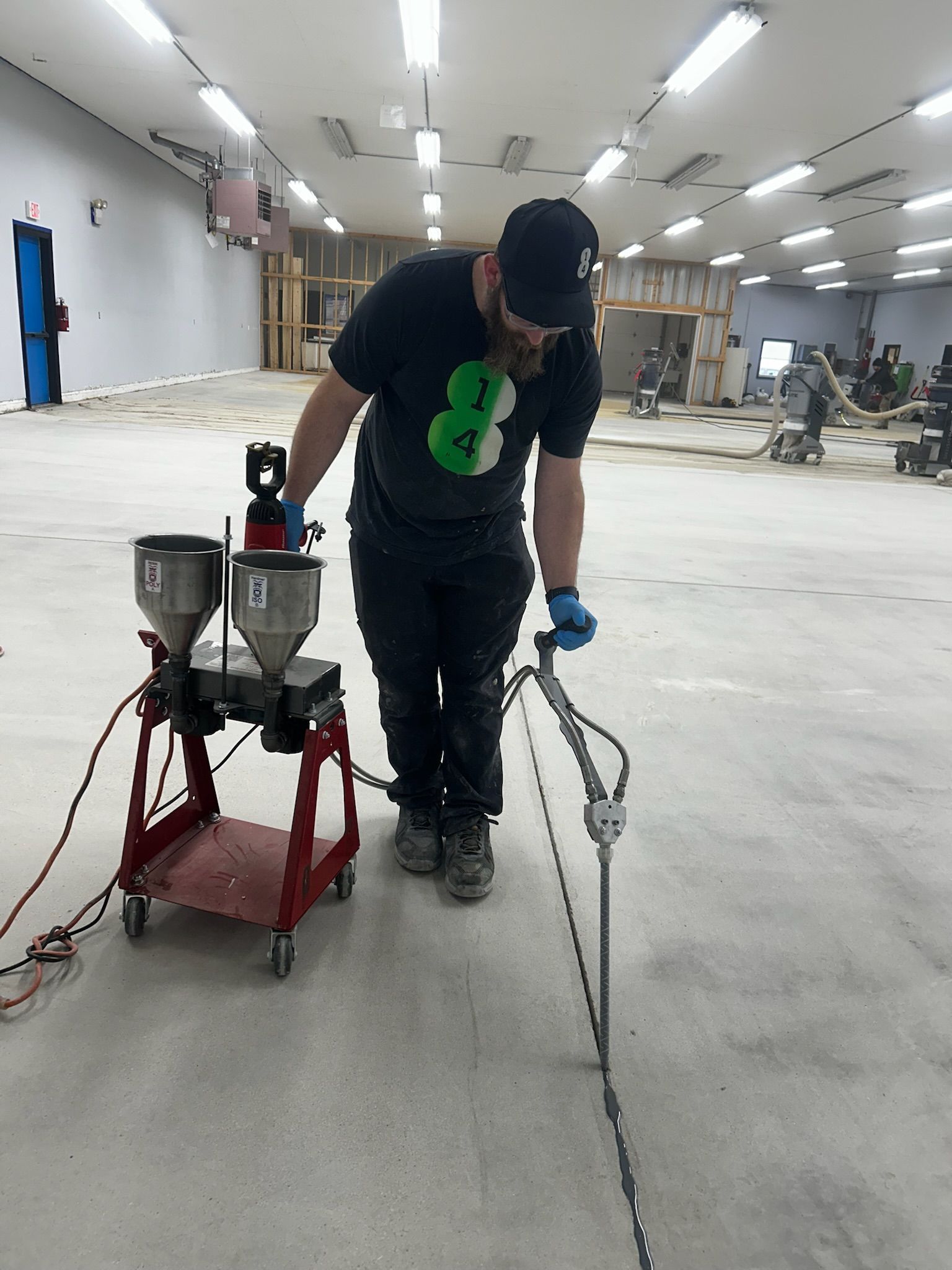
Once the crack is properly prepared, we inject or fill with a two-component polyurea system and immediately broadcast sand into the wet material. The sand provides body, fills voids, and gives the repair the density it needs to be ground flush. After curing, we grind the repair level with the surrounding slab. The result is invisible — clean, tight, and stable.
This is the approach for garages, industrial slabs, warehouses, and any concrete surface that's seen stress and will see more.
Method 2 — Cementitious Repair Mortars
For: Spalls, pop-outs, surface scaling, deteriorated edges, and areas where concrete needs to be built back up rather than filled in.
When the problem is surface loss rather than a through crack — spalling from freeze-thaw cycling, delaminated surface paste, eroded edges at control joints, or previous patch failures — the solution is cementitious. You need a material that profiles, bonds cementitiously, and can be finished to match the surrounding concrete.
We work with industry-standard repair mortars, including Ardex and Rapid Set, selected based on the specific application:
Ardex products are the choice for precision work — thin-section repairs, polished concrete prep, and applications where blend-in with the surrounding aggregate is critical. Ardex bonds at a cementitious level and can be feathered and finished to a profile that survives multi-grit diamond polishing without pull-out or edge failure.
Rapid Set products are the choice when the job clock is running. High early strength, rapid return-to-service, and the same cementitious bond quality as conventional repair mortars — without the wait. For commercial and industrial jobs where the facility needs to get back online, Rapid Set is the professional answer.
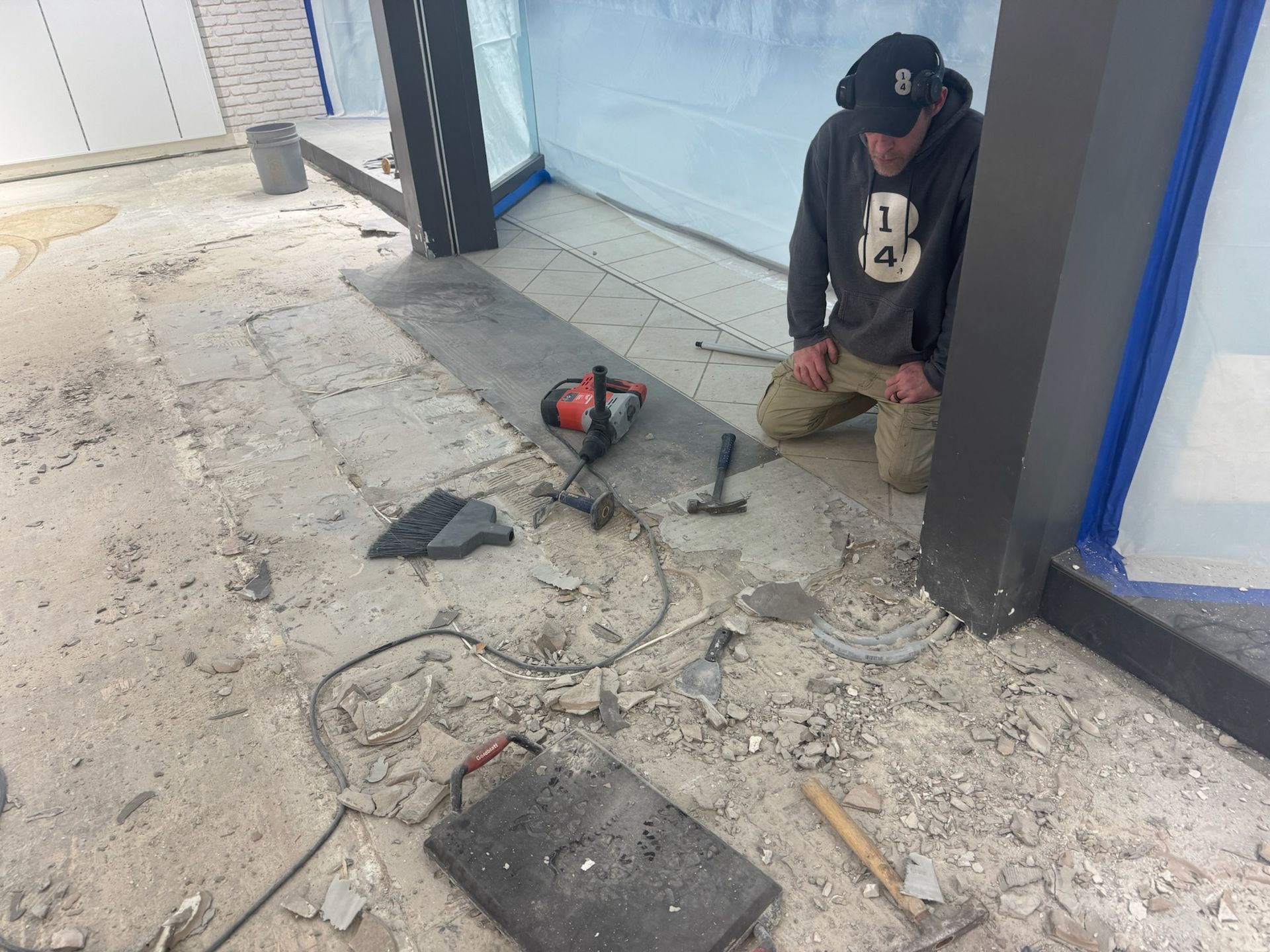
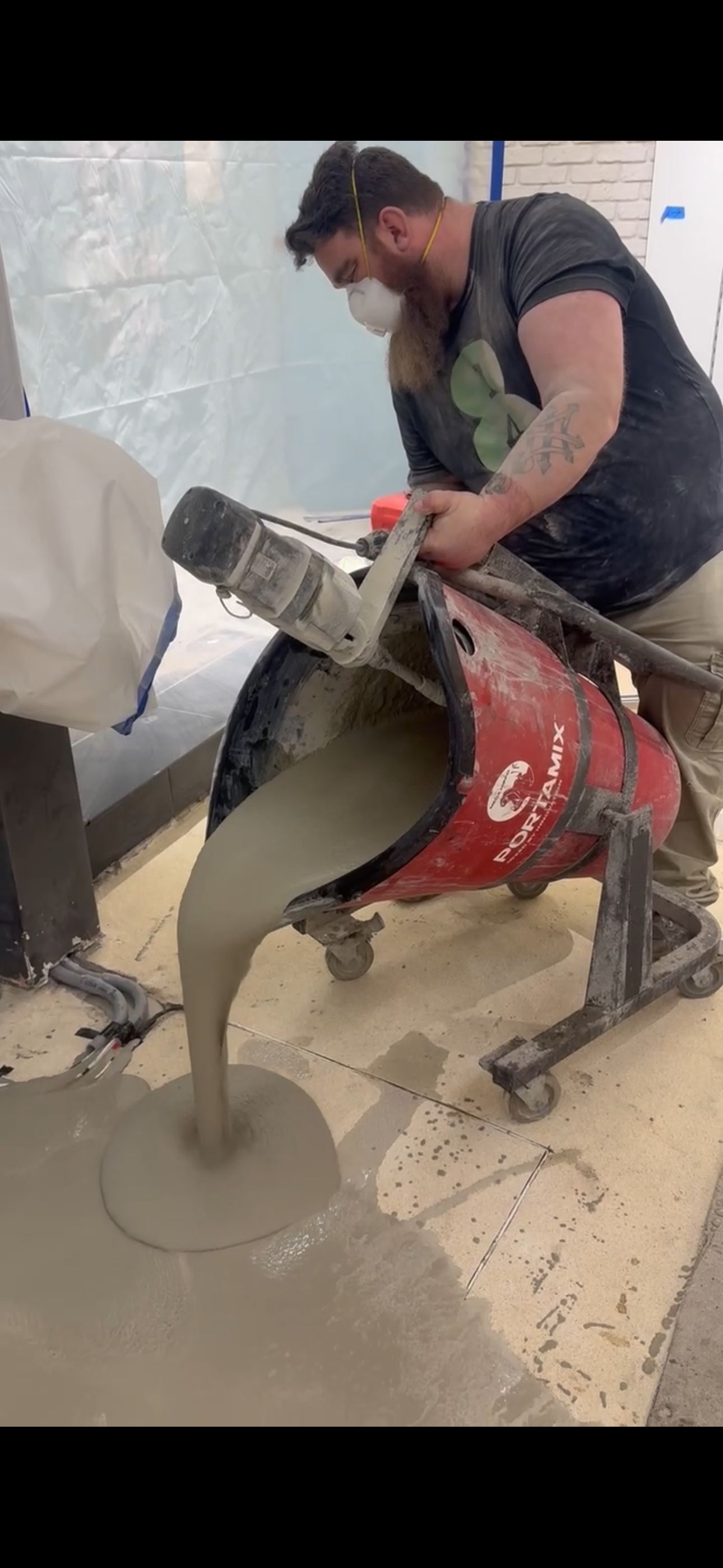
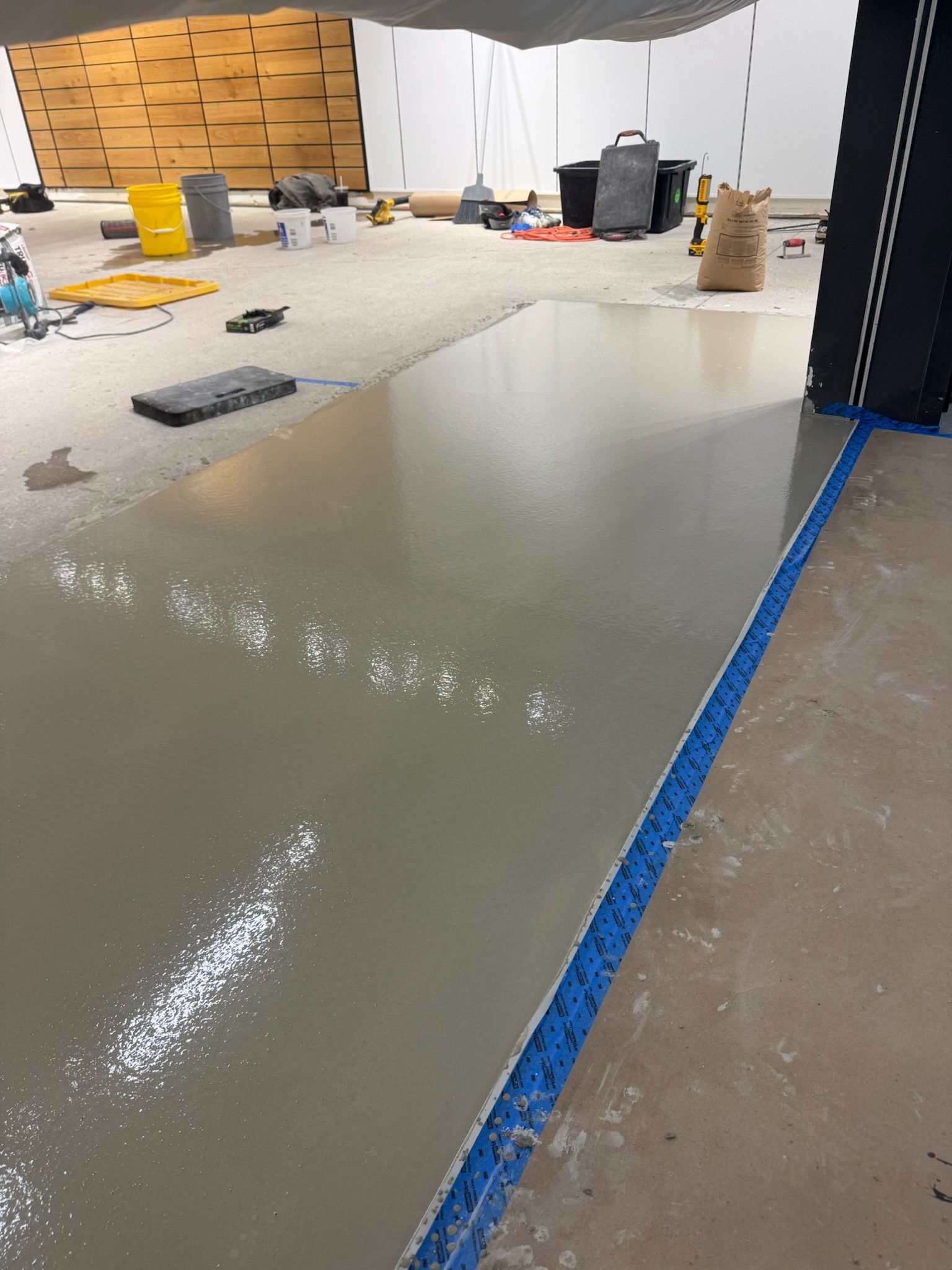
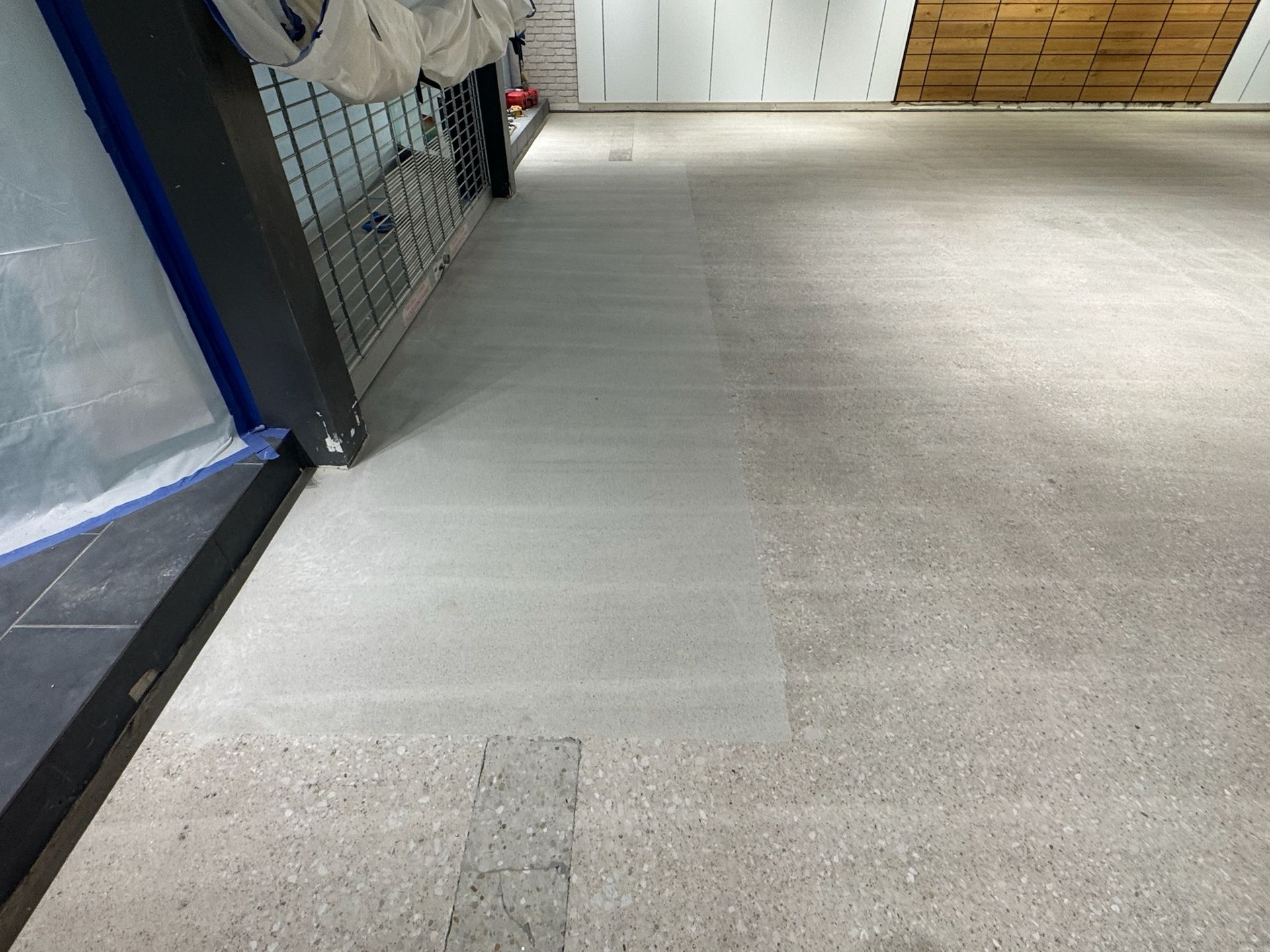
Both are mixed to the appropriate consistency for the application, troweled or poured into the repair area, profiled to the surrounding slab, and ground flush as part of the overall floor prep sequence.
Method 3 — Semi-Rigid Joint Filling for Polished Concrete
For: Control joints in polished concrete floors that must be filled, grindable, and capable of accepting a polish without crumbling or disbonding.
Control joints are not cracks. They are engineered movement accommodations — intentional saw cuts that direct where the slab relieves stress. On a polished concrete floor, they can't be left open. An open control joint is a maintenance issue, a potential trip hazard, and a visual break in an otherwise seamless finish. But they also can't be filled with just anything. The wrong filler — whether it's too rigid, too soft, or not formulated for diamond tooling — will fail, pull out, or telegraph under polishing.
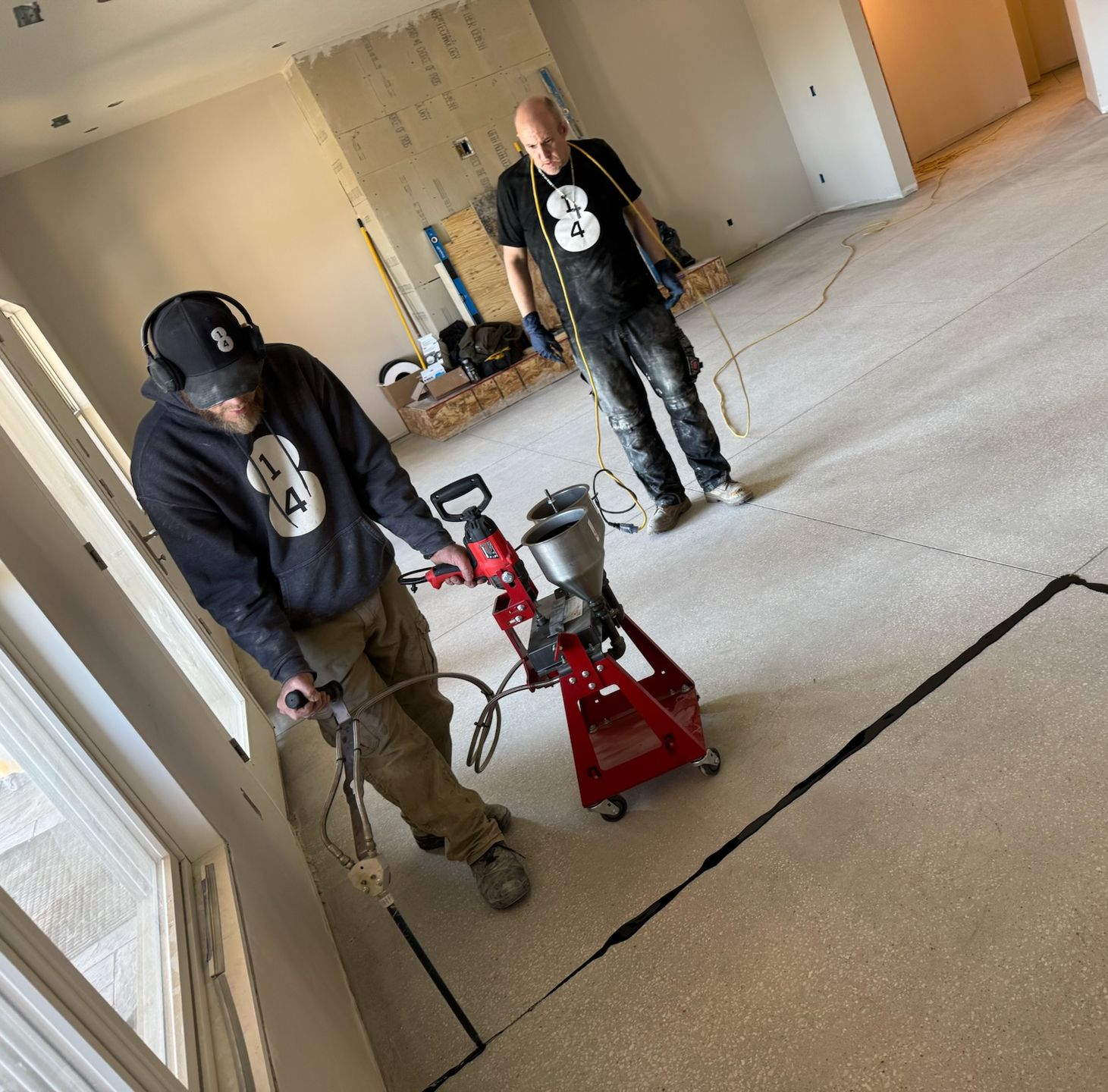
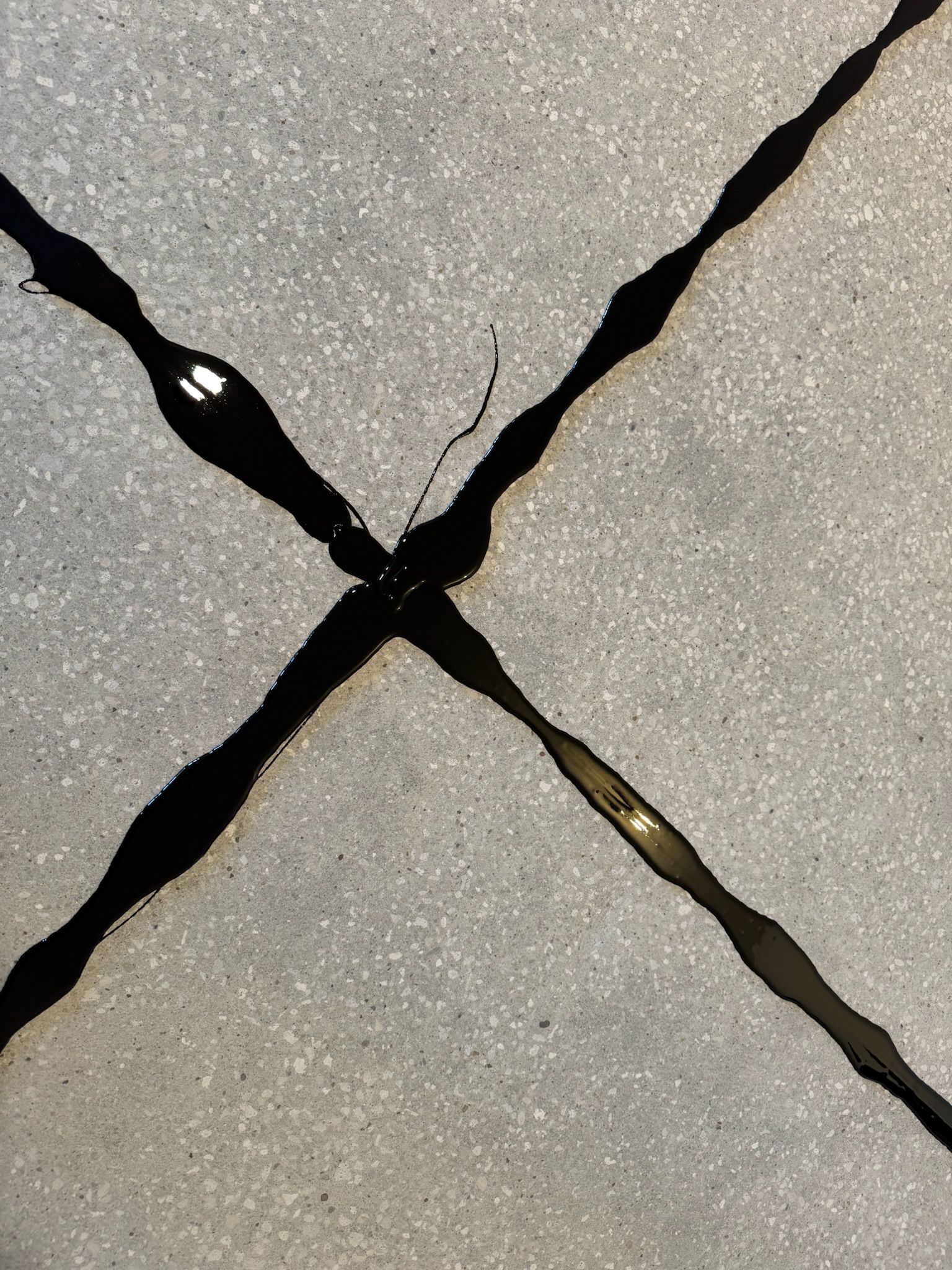
We use semi-rigid polyurea-based joint fillers specifically engineered for polished concrete applications. These products are formulated to flex with the joint rather than crack under load, while maintaining enough hardness to be ground flush and accept a polish. Products like RS-88 by Metzger McGuire are well-established in the polished concrete industry for exactly this purpose — but product selection is always dictated by the specific joint.
Joint width, depth, movement characteristics, traffic load, chemical exposure, and finish grit level all factor into which product is right for a given joint on a given slab. A narrow, tight control joint in a retail showroom has different requirements than a wide construction joint in a heavy industrial bay. We carry multiple semi-rigid fillers and make that call on-site based on what the concrete is telling us.
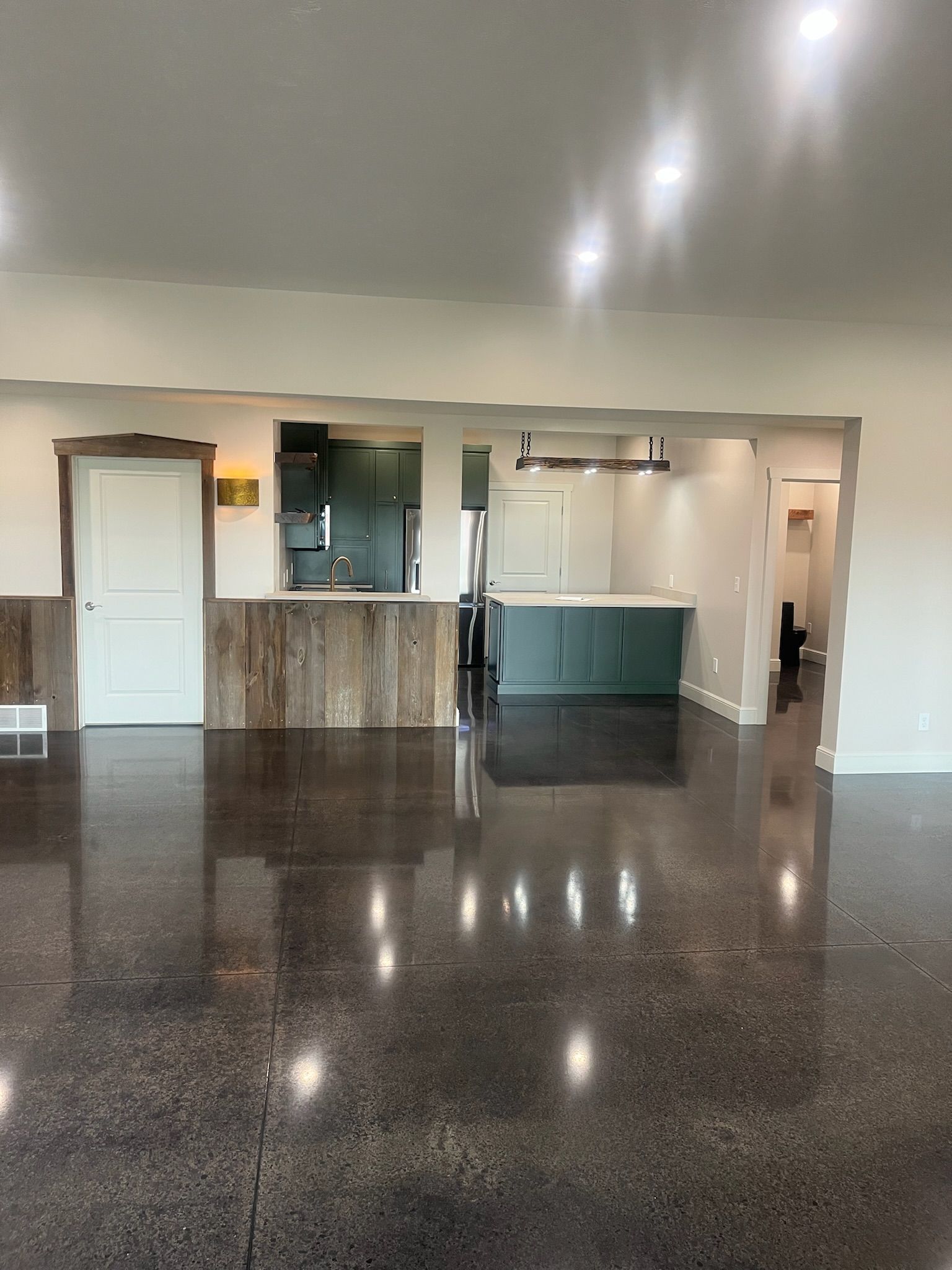
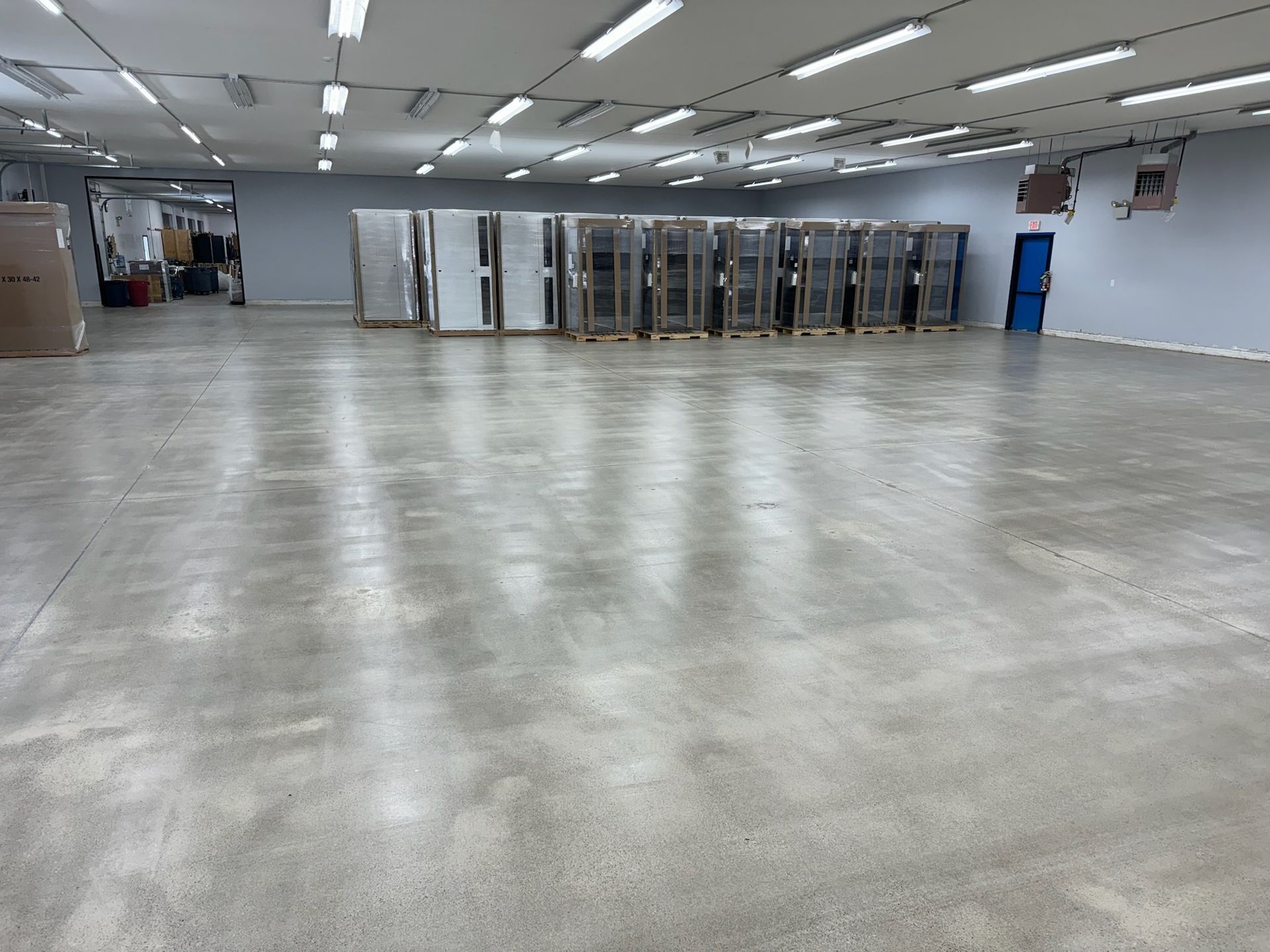
The process: clean and vacuum the joint thoroughly, apply bond breaker rod if depth requires it, fill to the correct level with the selected product, allow full cure, then grind and polish flush as part of the sequential diamond passes. Done correctly, the joint all but disappears into the finished floor.
Why Skipping Prep Is the Most Expensive Decision You'll Make
Coating and polishing contractors who skip or rush crack and joint repair do it for one reason — it's not billable time that produces a visible product. You can't photograph a properly chased crack the same way you can photograph a finished floor. So some operators minimise it, hand-fill without prep, or ignore it entirely and hope the coating hides it.
It doesn't hide it. It reveals it. Three months after installation, every unrepaired crack is a stress riser in the coating above it. Every poorly filled control joint is a pivot point where the finish will eventually fail. We have evaluated enough failed floors to know exactly what cut corners look like from the surface — and we've repaired enough of them to know that the cost of doing it right the first time is a fraction of the cost of doing it twice.
Our background is in masonry and concrete restoration. We were diagnosing slabs before we were coating them. That means when we show up to quote your floor, we're evaluating the substrate with the same rigour we'd apply to a structural restoration job — because the substrate is the job.
Why Customers in Erie & Northwest PA Choose 814 Epoxy for Concrete Repair
- Full crack preparation — every crack is chased with a saw before filling. No skim-overs.
- Three distinct repair methods — polyurea, cementitious mortar, and semi-rigid joint filler — matched to the specific crack or joint
- Polyurea + sand broadcast for active and structural cracks — flexible, fast, ground flush and invisible
- Ardex and Rapid Set cementitious mortars for spalls, surface damage, and precision polished concrete prep
- Semi-rigid polyurea joint fillers (including products like RS-88 by Metzger McGuire) for control joints in polished concrete — product selection based on joint width, depth, load, and finish requirements
- Every repair ground flush before coating or polishing begins — no proud patches, no high spots
- Masonry and concrete restoration background — we evaluate slabs the way a restoration contractor does
- Serving commercial, industrial, and residential slabs across Erie, PA and Northwest Pennsylvania
This work is right for you if:
- You're planning a polished concrete floor and need control joints properly filled before diamond tooling begins
- Your slab has active or historical cracking that needs to be stabilised before a coating system is applied
- You've had a previous floor fail at crack or joint locations, and need the repair done correctly this time
- You're on a commercial or industrial project where the floor prep needs to match the quality of the finish
A floor is only as good as the slab it's built on. We take that seriously — and it shows in every floor we deliver across Erie and Northwest Pennsylvania.
Need a Slab Assessment?
Every job starts on-site. We'll walk your concrete, identify what needs to be addressed, specify the right repair approach for each area, and give you an accurate number before any work begins. No guesswork, no ballpark estimates from photos.
These are just a few of the clients we work with.