Concrete Polishing
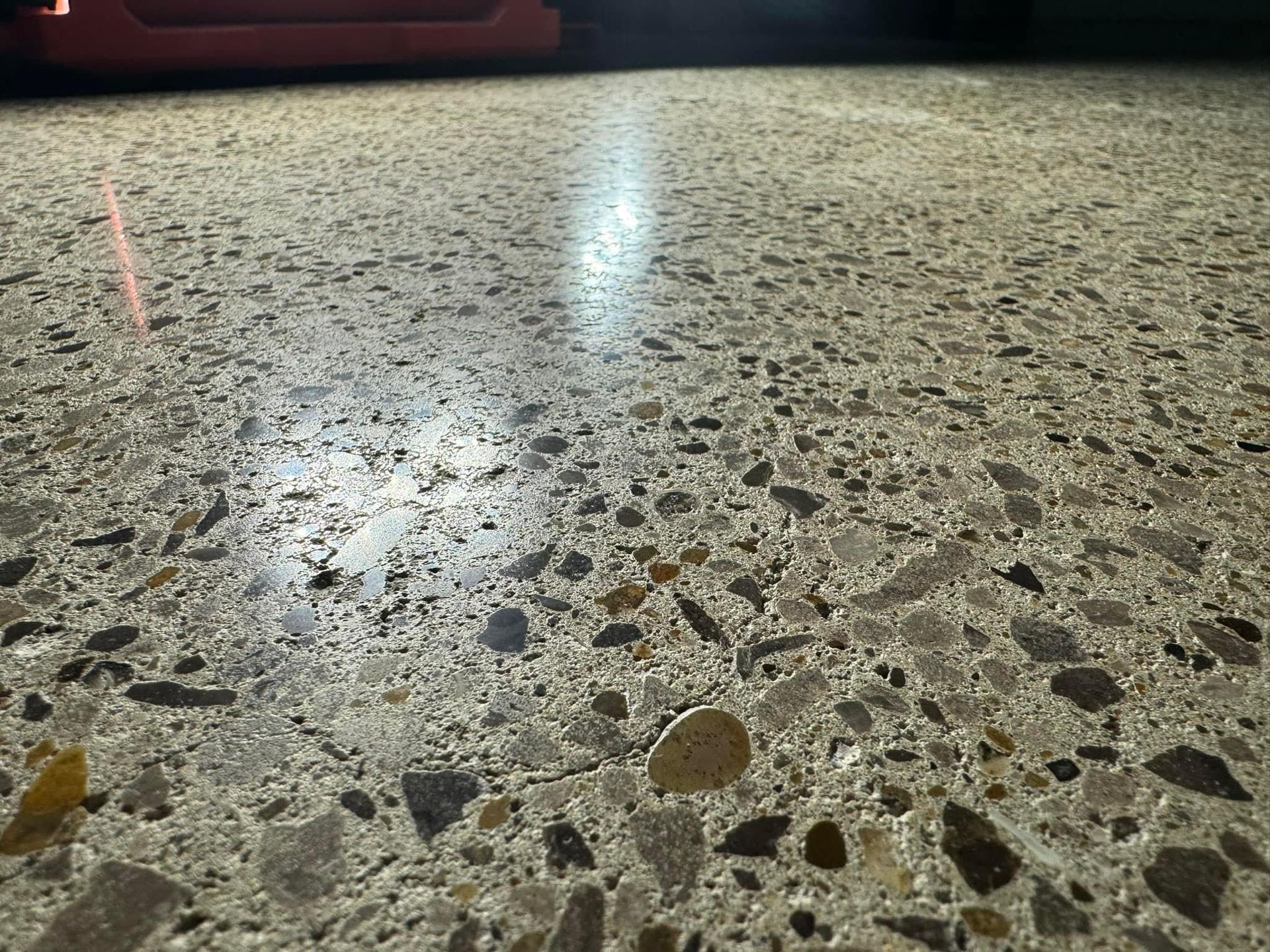
Concrete polishing is a mechanical, multi-stage process that refines an existing concrete slab into a durable, smooth, and highly reflective floor—much like the careful, progressive polishing of a rough gemstone or diamond into a brilliant, faceted jewel. Each step builds on the last, using industrial diamond abrasives to grind away imperfections, harden the surface, and reveal increasing levels of clarity, depth, and shine. Just as a jeweler starts with coarse tools to shape the stone and gradually moves to finer ones to achieve brilliance, concrete polishing follows a deliberate progression of grits—ensuring no shortcuts for a flawless, long-lasting result.
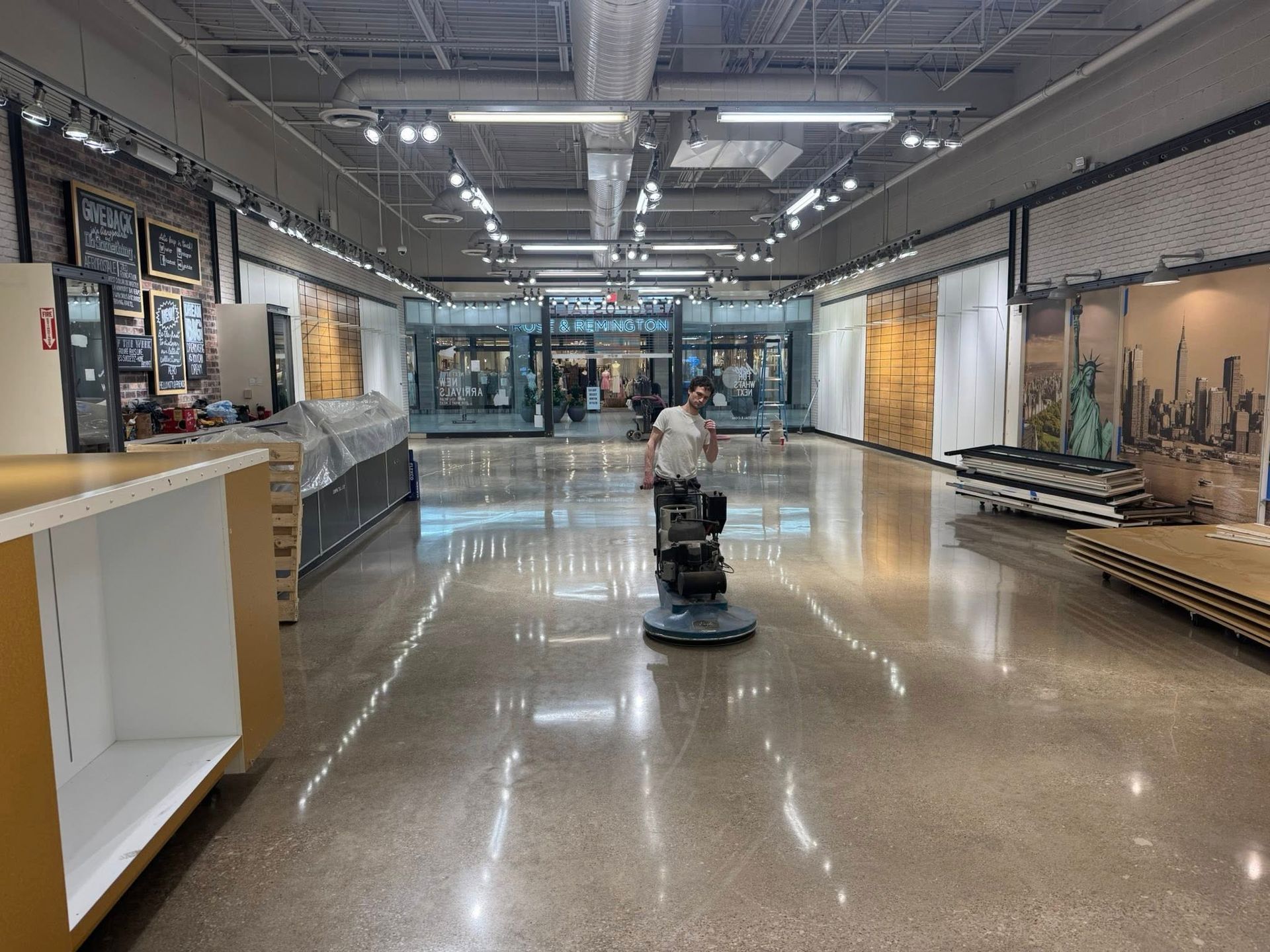
The process begins with thorough surface preparation: cleaning, repairing cracks or defects, and initial heavy grinding with coarse metal-bonded diamond tools (typically 30-100 grit) to level the floor, remove old coatings or weak surface layers, and create a uniform base. Intermediate grinding follows (around 100-200 grit) to eliminate deeper scratches and smooth the surface. Honing typically starts after about the third pass—often around the 200-400 grit stage—where the floor shifts from rough grinding to a refined, satin-like honed appearance with lower porosity and enhanced clarity. A liquid densifier is usually applied at this point (or shortly after) to penetrate the concrete, chemically harden it, reduce dusting, and prepare for finer polishing.
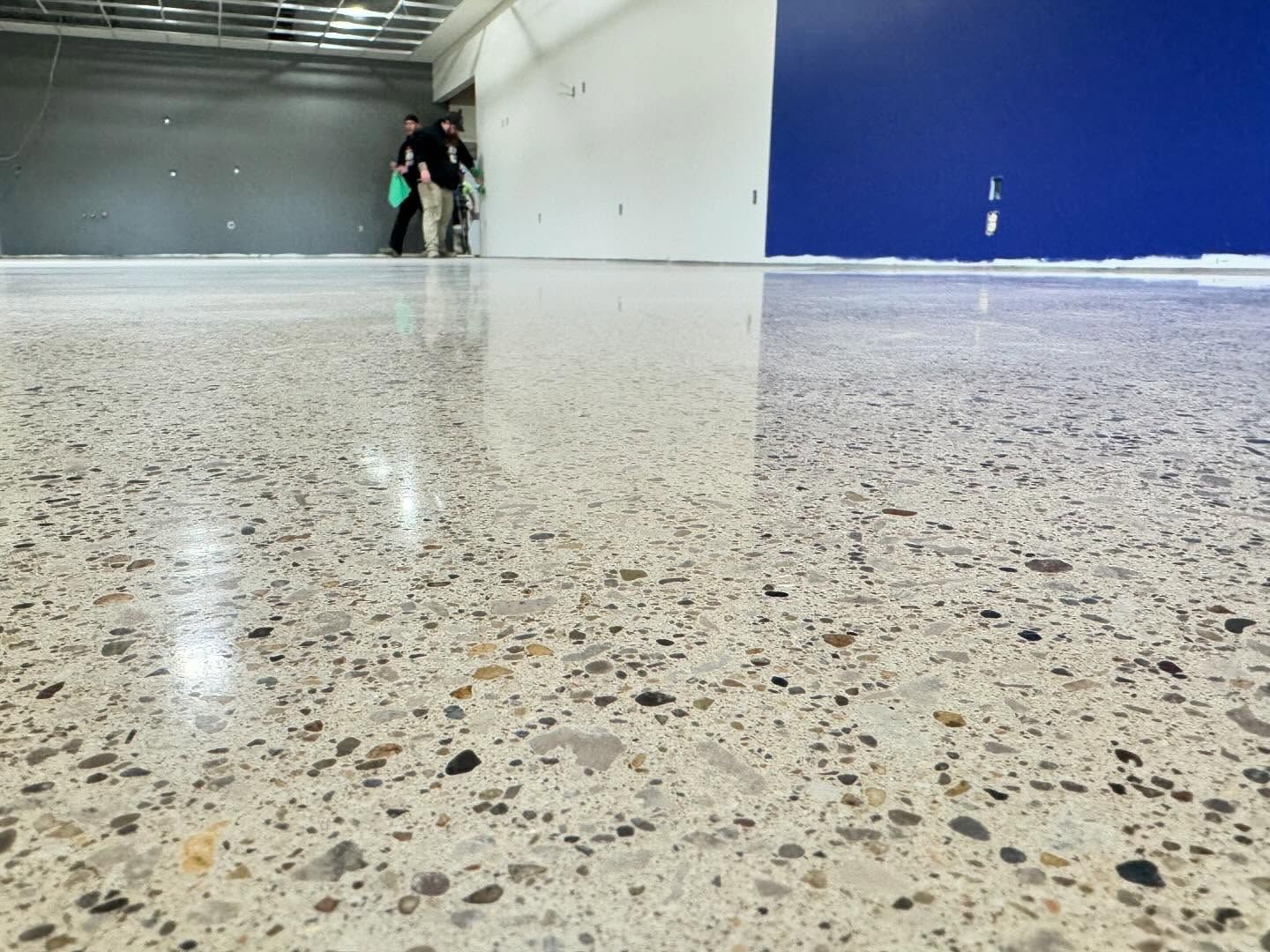
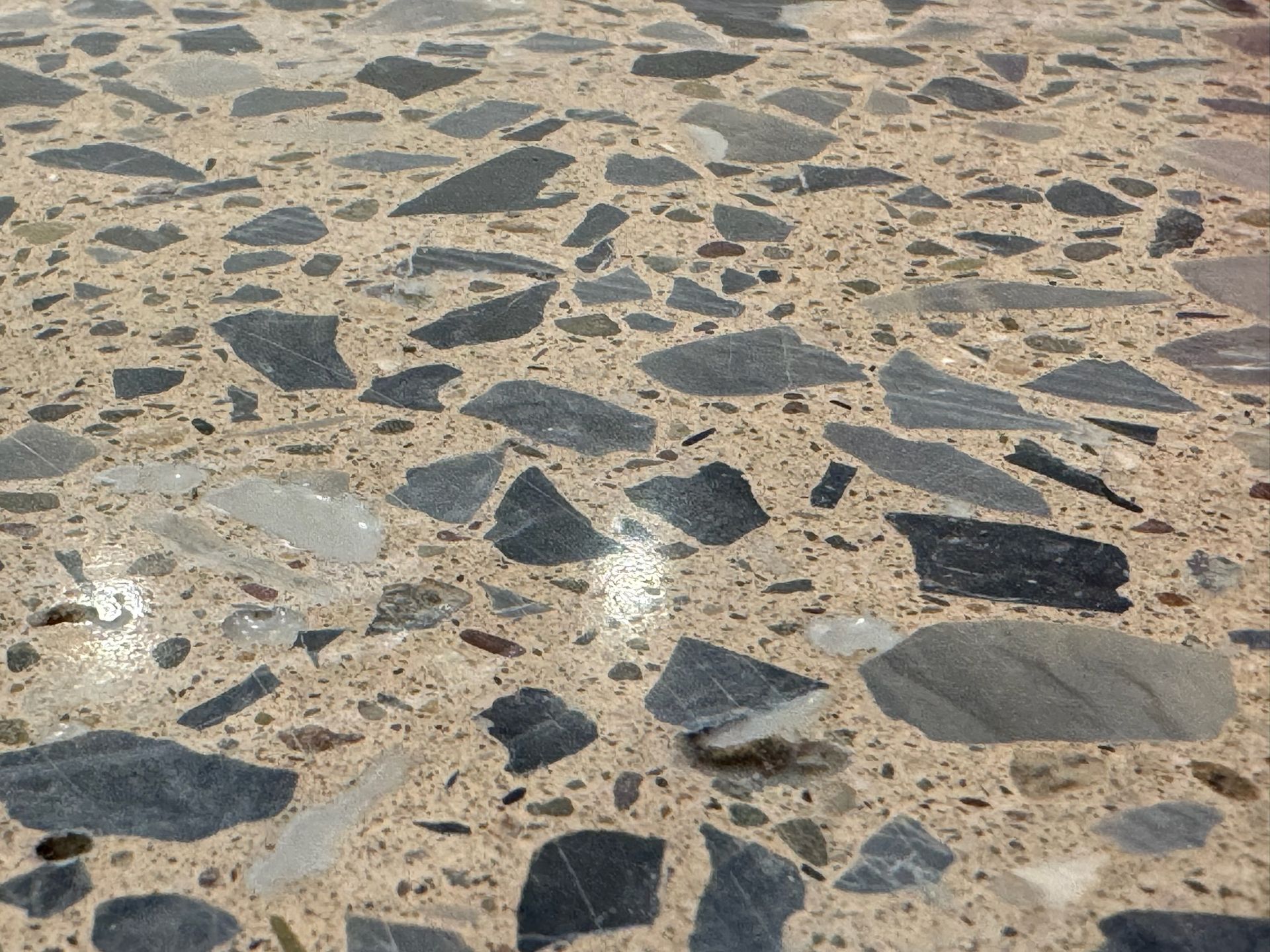
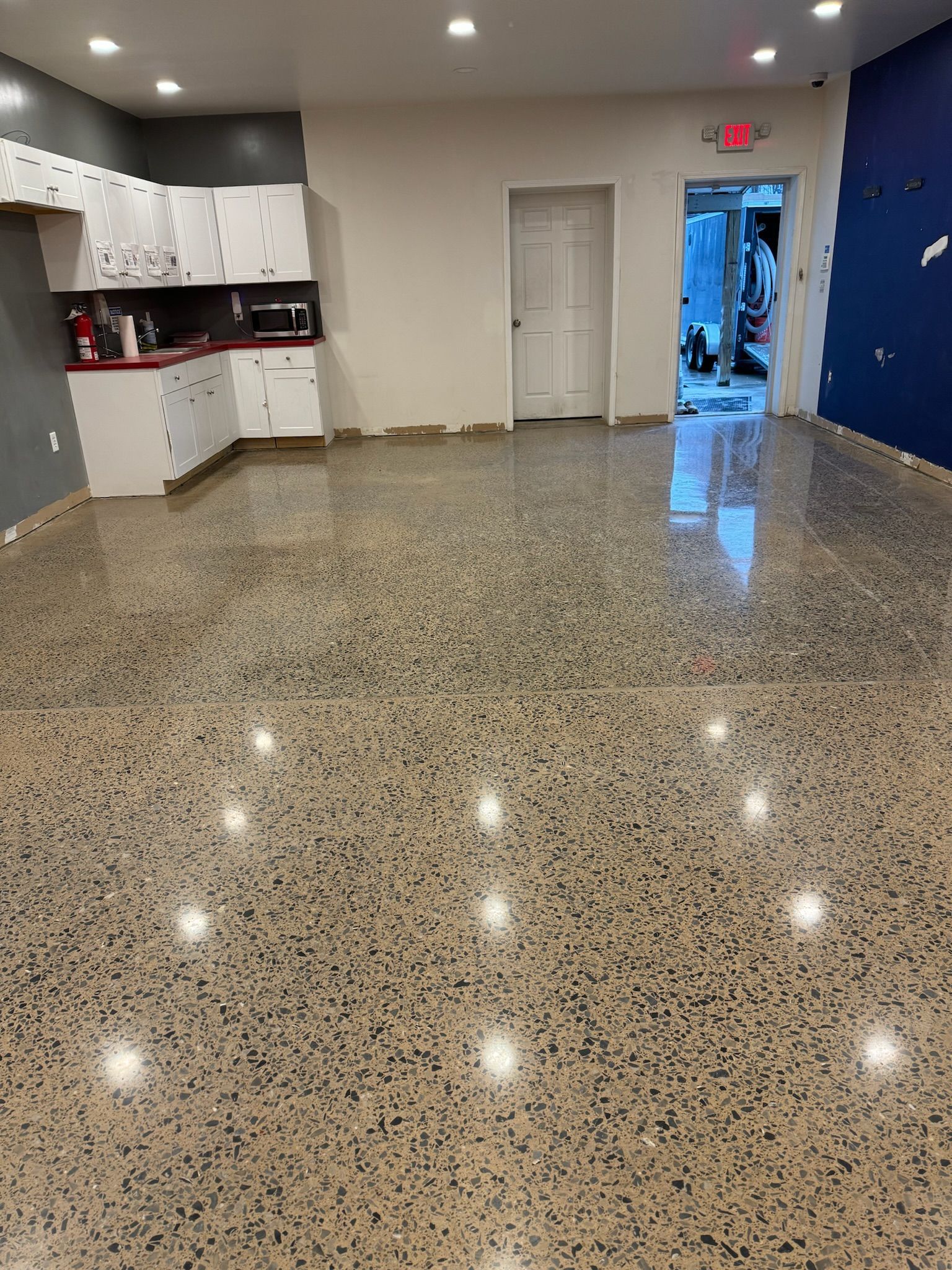
From there, resin-bonded diamond pads take over for the true polishing phase: many projects reach a solid satin or semi-polished sheen around 400 grit, where light reflectance value (RLV) can hit impressive levels like 55% or higher (depending on concrete quality and technique), delivering good diffused light reflection and a clean, professional look without full gloss. Continuing with finer grits (800, 1500, up to 3000+) progressively removes prior scratches, boosts reflectivity, sharpens clarity, and creates mirror-like finishes with exceptional light bounce. The end result is a dust-free, stain-resistant, low-maintenance floor that brightens spaces, improves slip resistance when maintained properly, and stands up to heavy traffic for years—all while highlighting the concrete's natural beauty, whether with exposed aggregate for texture or a sleek, modern sheen.
At 814 Epoxy and More in Erie, PA, we customize the polishing journey to fit your vision—whether a subtle honed satin for industrial durability or a high-gloss jewel-like shine for showrooms and homes—delivering exceptional toughness, elegance, and value right here in your local community.
Key Benefits of this system:
- Superior Longevity Without Peeling or Failure — Polished concrete hardens and densifies the existing slab itself, creating an integral, abrasion-resistant surface that withstands heavy foot and vehicle traffic for 15–25+ years (or longer) with proper care. Unlike epoxy coatings, which are an added layer prone to chipping, peeling, delamination, or needing recoating every 5–10 years due to impacts, substrate movement, or wear, polishing eliminates those failure risks entirely.
- Exceptionally Low Maintenance — Once polished, the non-porous, dust-proof floor requires only routine sweeping and occasional mopping with a neutral cleaner—no waxing, stripping, recoating, or special sealers needed. Epoxy systems often demand more vigilant care to prevent scratching, yellowing (from UV), or touch-ups, adding ongoing time and cost.
- Better Abrasion and Wear Resistance in High-Traffic Areas — The mechanical grinding and densification process makes polished concrete exceptionally hard and scratch-resistant, ideal for warehouses, showrooms, retail spaces, or garages with constant use. While epoxy excels in impact absorption and extreme chemical resistance, polished concrete often outperforms in pure abrasion-heavy environments without the risk of coating breakdown.
- Cost-Effective Over the Lifecycle — Polishing typically has lower long-term costs: it uses your existing concrete slab (no added materials), reduces waste, and avoids frequent replacement or refurbishment. Upfront costs can be comparable or lower than premium epoxy, but the savings in maintenance and longevity make it more economical over time—especially for large or industrial areas.
- Enhanced Sustainability and Indoor Air Quality — Polishing is eco-friendly: it minimizes material use, VOC emissions, and landfill waste compared to resin-based coatings. It also eliminates concrete dusting (efflorescence), improves air quality, and boosts light reflectivity (up to 100%+ increase) to brighten spaces and cut lighting/energy bills—without the potential off-gassing or allergens from some coatings.
- Timeless, Natural Aesthetic Appeal — Polishing reveals and enhances the concrete's inherent beauty—whether with exposed aggregate for texture, subtle dyes, or a sleek high-gloss sheen—delivering a modern, sophisticated look that feels integrated rather than "coated." It avoids the artificial or glossy-over-time fade that can occur with epoxy.
Ideal situations:
- Any Industrial Setting
- Commercial Garages
- Commercial Retail
- Any Large Spaces Where Cost Is Prohibitive
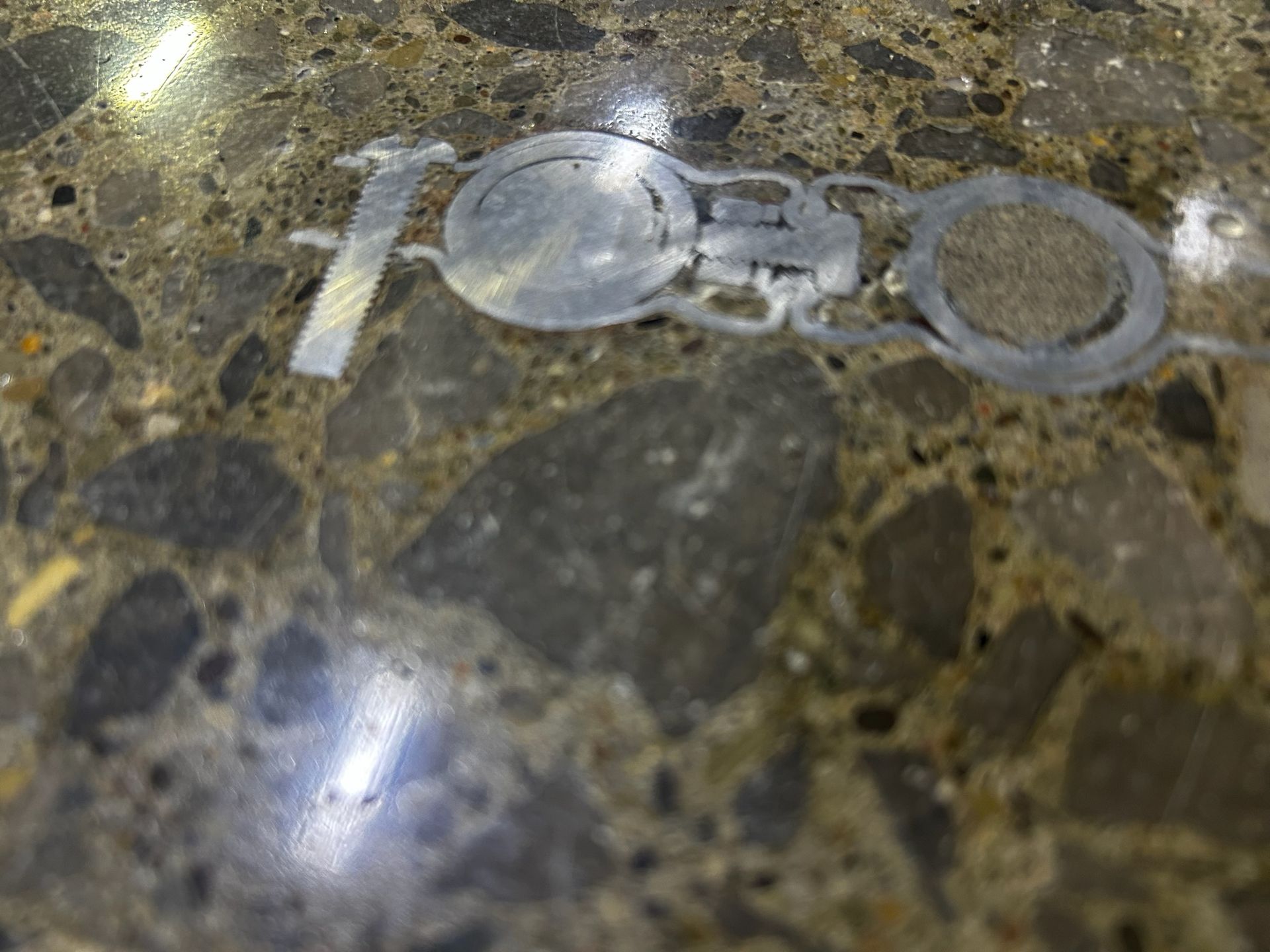
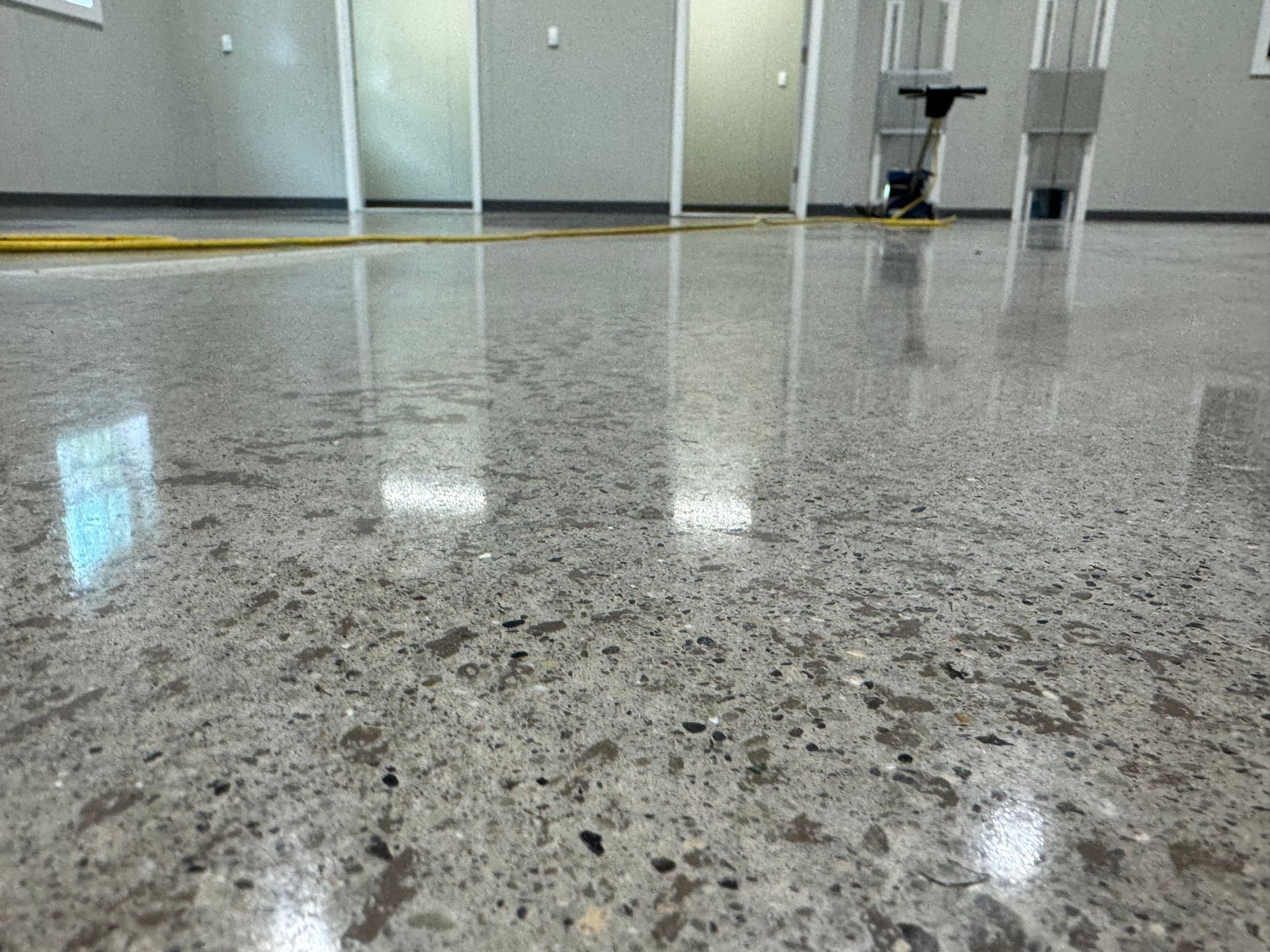
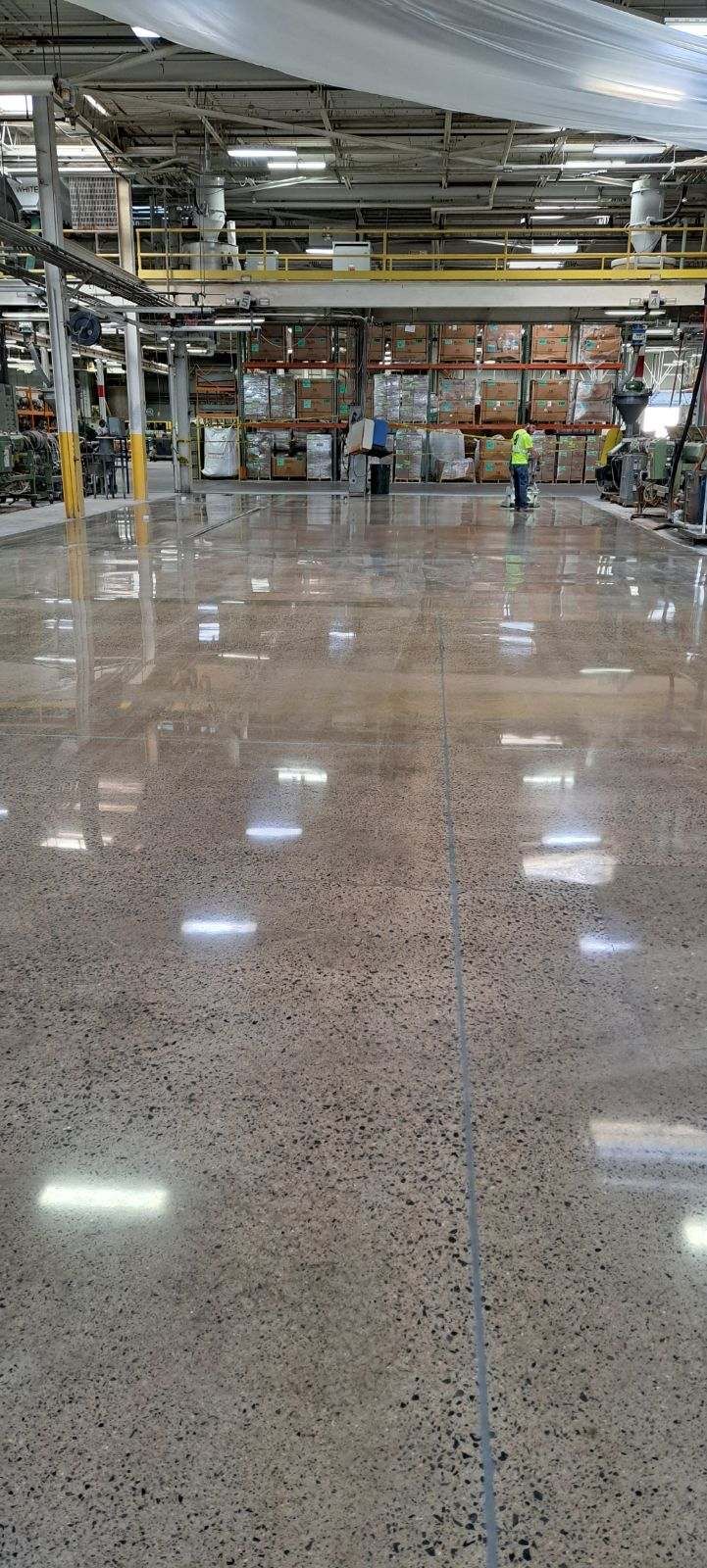
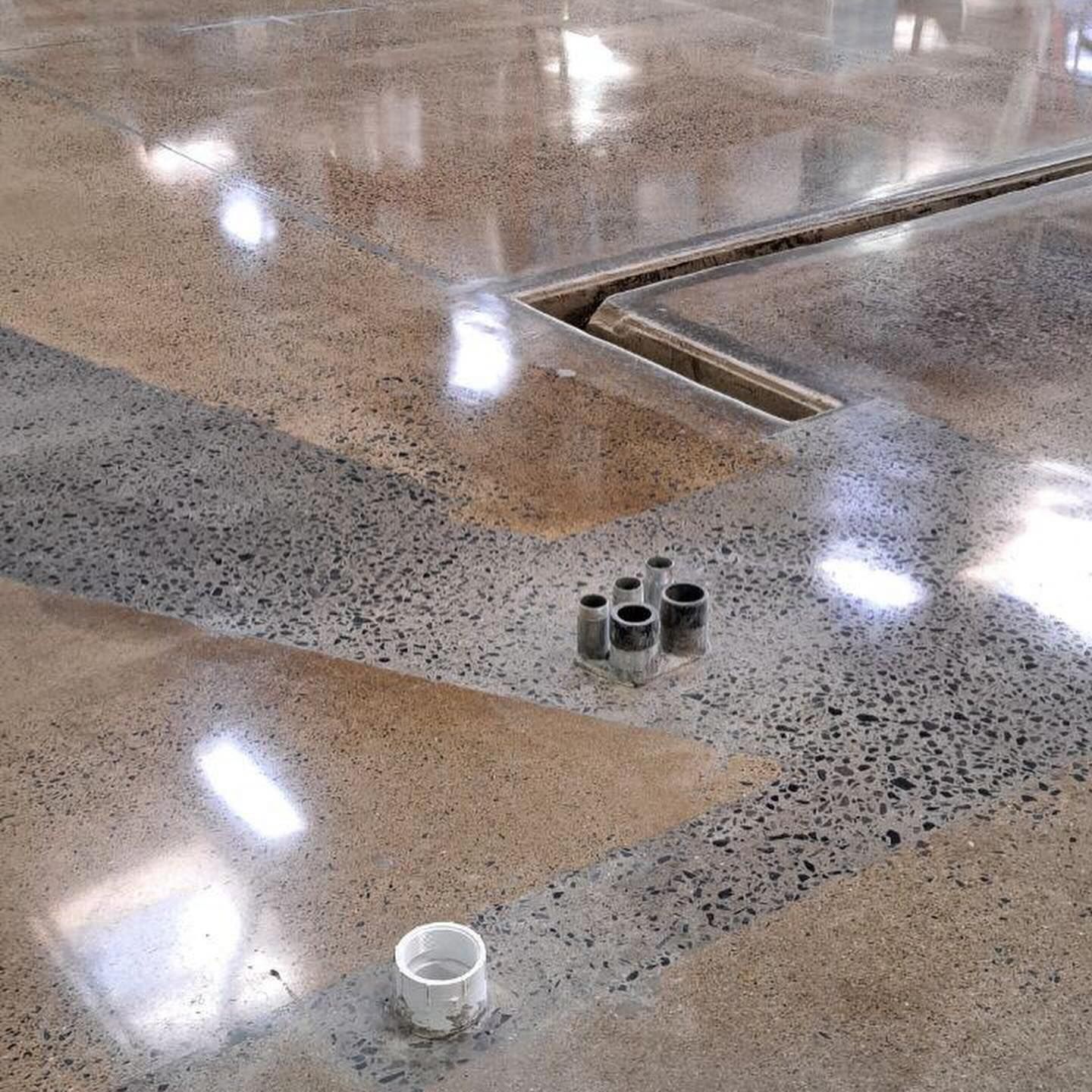
These are just a few of the clients we work with.